




With just weeks to go till the HFSS ad ban comes into force, the CAP guidance has been published? What does it tell us?
With weeks to go before the law comes into force, advertising watchdogs have published new guidance for companies to navigate the minefield of the government’s new HFSS advertising restrictions
Almost as astonishing as the lack of notice is the fact this is the third time the Committee of Advertising Practice (CAP) has published such guidance, reflecting a timeline of confusion, delays and rowbacks.
Now presented by the government as part of health secretary Wes Streeting’s “moonshot” to end the obesity epidemic, the 9pm TV watershed and complete online ban have in reality been sitting on the launchpad since Boris Johnson’s government. And campaigners claim they have been “gutted” to such an extent they no longer maintain the spirit of the original legislation.
But with ministers planning a massive overhaul of HFSS definitions underpinning the ban in the new year, could there be yet another sting in the tale?
The CAP guidance published on Thursday gave companies almost exactly four weeks to get their heads around how to operate under the new regime.
“There is still a fair bit of uncertainty about elements of the regulations but one thing is certain, the timing absolutely stinks,” says Katrina Anderson regulatory lawyer at Mills & Reeve.
Anderson says there is major disgruntlement that the ASA did not produce its guidance earlier to give companies more time, with TV ads booked months in advance and even digital ads several weeks.
“We have legislation coming into force on 5 January and those ads have already been decided months ago.”
The implementation was pushed back from October to January to allow time for the latest CAP consulation, after a dramatic intervention by ministers to avoid HFSS brand ads being banned even if they didn’t feature ‘less healthy foods’ (LHFs).
The new guidance includes a crucial new “identifiability test” which the ASA will use to decide whether an ad is for LHFs and should be referred to Ofcom, with the potential of monster fines of up to 5% of annual turnover for a comany’s combined HFSS brands, capped at £250,000.
It is the first time advertising regulation has brought the threat of such penalties.
The new guidance: rules and exemptions
The rules prohibit advertisements for ‘identifiable’ less healthy food (LHF) classified as HFSS, scoring 4 or more points for a food, or 1 or more for a drink, under the DHSC nutrient profiling model.
A less healthy product is ‘identifiable’ if persons in the UK… could reasonably be expected to be able to identify the advertisements as being for that product.
Brand ads are exempt.
The rules do not apply to any advertisement by or on behalf of food or drink SMEs (with fewer than 250 employees).
The rules only prohibit less healthy product advertisements in Ofcom-licensed TV services and Ofcom-regulated on-demand programme services (where, in each case, the prohibition applies between 5.30am and 9pm), and on the internet (where the prohibition applies to paid-for advertisements only).
[The rules] will not apply to advertisers’ own marketing communications appearing on their own websites… or in other non-paid-for space online under their control such as marketers’ own social media channels or apps… [However], paid-for ‘promoted’ or ‘boosted’ posts are examples of social content that meets the payment test.
Listings such as those on retail sites (for example, a supermarket) or delivery apps are ordinarily out of scope… However, different considerations apply… for the placement of a product listing that could reasonably be considered an advertisement.
Where the advertiser reaches an arrangement to pay an influencer… that would be deemed to be paying for an advertisement… resulting in the influencer’s content being within scope.
Source: CAP
The guidance says the ASA will consider factors such as whether a product is in the foreground or background, the duration of its appearance and how attention is drawn to it, meaning that just because an LFH can be spotted on screen, doesn’t mean the ad is illegal.
“Imagery of less healthy products that people are unlikely to be able to recognise when viewing an advertisement in real time are unlikely to meet the identifiability test,” it says. “This could be because the product is shown very briefly in the advertisement, or because it is in the background of an advertisement resulting in it not being discernible.
“For example, advertisements that include fleeting references to less healthy products in the context of general imagery of supermarket shelves, or food or drink products on tables in a restaurant or as part of a retailer creative promoting their Christmas offerings.”
Anderson says: “The identifiability test is generally speaking likely to be seen as a big win for the industry.”
The guidance also says ads may depict a specific LHF through branding techniques or combinations of branding techniques relating the product but that advertisers should proceed with caution
If an ad includes branding such as logos, livery or jingles relating to a company or a range of products, but does not include branding references related only to a specific LHF, it is likely to be in the clear
But an ad including branding related only to a specific LHF, such as a specific product’s logo, would fail the test.
Voluntary compliance
The good news is companies have been working under restrictions since 1 October, when trade bodies and media owners implemented a voluntary ban across all major TV channel and online sites.
Richard Lindsay, director of legal & public affairs at the IPA, says the industry is relieved to finally have some certainty.
“It has been a long time coming, but we are pleased that the ASA has finally published its statutory guidance on the new rules,” he says
“The industry has done a great job of complying with the voluntary agreement struck with the government. Now agencies and advertisers can use the guidance to aid compliance for those ads.”
Yet the consultation itself reveals there is still substantial confusion and anger, on both sides of the debate, over elements of the ban.
BRC deputy director of food Andrea Martinez-Inchausti says preparing has been a huge task for retailers, involving both their regulatory and marketing teams in long discussions with broadcasters, ad agencies and the ad clearance body Clearcast.
She describes the new CAP guidance as “very top line” and says it goes into “very limited” detail.
“Many of the questions we have been working out with members in the last few months are not clarified,” she adds.
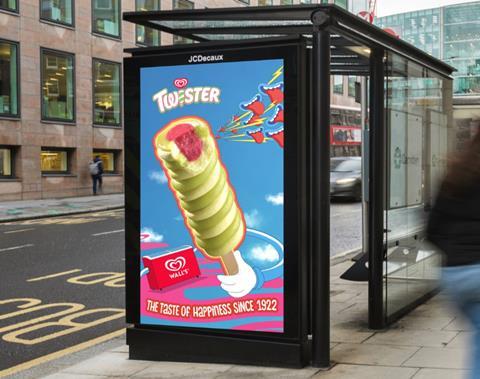
Perhaps most challenging is how online rules can be policed and what constitutes a paid-for ad, as it is these that are banned. The ASA says it will “assess whether payment has resulted in placement of what can reasonably be considered an advertisement by or on behalf of the party paying”.
The BRC says that while most companies understand monetary or gifting exchanges are considered payment, it is less clear in situations where neither money nor gifts are exchanged, but when both the brand advertising and the platform they are on benefit.
One of a raft of areas in doubt is product shows for the media, for example presenting Christmas ranges. Would these count as payment? The BRC says the answer in unclear.
Retail bosses have also raised concerns about contractual agreements between brands and retailers to price promote products being roped in.
The BRC says the legislation was never intended to include product placements on a retailer’s own site, though these are referenced in the guidance (see box, above).
Another concern arises over the ASA’s use of artificial intelligence to scan the internet to find breaches, set to be a key weapon in enforcement.
“There are ads which at a first glance may seem non-compliant but when you look at the detail, they are,” says Martinez-Inchausti.
“We want to avoid a very resource-intensive exercise where our members have to provide evidence for each ad they produce.”

A media source tells The Grocer the “final guidance” is in reality only a step towards further clarity and that it is inevitable issues will start arising when the ban begins for real.
“It clearly can’t answer every specific question that might arise from individual campaigns and advertisers, and this issue will no doubt be a focus for the year ahead.
“We’re all working hard to ensure compliance as we get to understand the rules and guidance.”
The health lobby is also unhappy at what it claims is a lack of clarity, though its main concern is that the law has been blunted by industry lobbying, particularly over the issue of brand advertising.
The Obesity Health Alliance (OHA), a coalition of more than 65 health bodies, says a government impact assessment claiming the policy would remove up to 7.2 billion calories a year from children’s diets risks being obsolete.
It was based on assumptions the ban would lead to reformation or companies switching to advertising healthier ranges, while the brand exemption would only be used by companies without the luxury of healthier options to turn to.
A Cancer Research UK analysis in 2019 showed that nearly 80% of unhealthy food ads could be replaced by those for heathier alternatives in companies’ portfolios.
“In contrast, the new draft guidance does not incentivise the promotion of healthier products,” the OHA says in its evidence submission.
“Instead, it encourages companies to default to the brand exemption, regardless of their product range. This represents a significant shift from the original policy intention.”
Overhauling the NPM?
Yet moves are afoot by the government which could massively move the goalposts once again.
Last week The Grocer revealed it had set out plans to push ahead in the New Year with a consultation over a proposed overhaul of the Nutrient Profiling Model (NPM), used to underpin both the advertising ban and the in-store HFSS promotions legislation.
The government will publish a response to the 2018 review of the NPM, which had been put on ice by the previous Tory government, as early as January.
The FDF has warned it could force from shelves hundreds of products which have already been reformulated to meet the advertising restrictions. Cereals, fruit juices, yoghurts and smoothies all face being rebranded as HFSS, the FDF says, claiming the levels of sugar reduction demanded under the 2018 review are “simply not achievable”.
The NPM has underpinned CAP’s rules for television since 2007 and for non-broadcast since 2017. Never in that period has it faced an overhaul like the one now on the cards – just as food companies, broadcasters and advertising watchdogs finally see the long-promised junk food ban get off the ground.





No comments yet