As younger consumers rewrite the rules of festive eating, the brands and retailers that embrace flexibility over tradition are best placed to win

Most historians agree that the British have Charles Dickens to thank when they tuck into roast turkey at Christmas. “Turkey was around in the 1700s in Britain. But it’s Dickens in A Christmas Carol – he kind of invents that tradition,” says Rachel Rich, an expert on the history of food at Leeds Beckett University.

Over time, many more festive favourites emerged, from pigs in blankets to brussels sprouts, while the flavour palate of mince pies and Christmas pudding are based on spices that would have figured throughout the year for a lot of British people in the 18th century.

“However, that gradually gets narrowed down, so that by the 20th century, you’re really only associating those flavours with Christmas,” adds Rich, who authored The King’s Dinner: Family, Nation and Identity on the British Table. “The Christmas dinner in Britain is letting people eat a kind of concentrated version of traditional Britishness.”


But while Christmas food remains rooted in tradition, things are changing. The Great British Christmas 2025 Survey, which polled 2,000 adults immediately after Christmas, found “a quiet but important shift” among younger adults and child-free households. Under-35s are significantly more open to alternative proteins, non-traditional meals, blended cultural menus and non-alcoholic drinks.

Botivo x Ottolenghi image

Under-35s are more open to non-alcoholic drinks

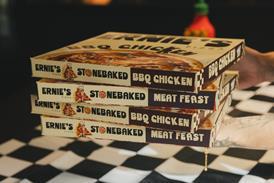
Meanwhile, the Tesco Christmas Trends Report 2025 found that 17% of 25 to 34 year-olds were planning to serve the likes of curry, pasta or pizza. Research by Papa Johns in November claimed 26% of Brits were considering staying away from the kitchen altogether and ordering a takeaway, with pizza the most likely option, closely followed by burgers, fried chicken and kebabs.

So, how and why is ‘The Big Day’ changing? What are the opportunities for supermarkets, suppliers and marketers? And what’s the next big Christmas trend?

While tradition is still critical at Christmas, younger adults are “loosening rules and reserving the right to set their own”, says Matt de Leon, MD of brand engagement agency Richmond & Towers, which carried out The Great British Christmas 2025 Survey alongside Possibility Consulting.

Plant-based options, fish and meat other than turkey are likelier to find favour as a centrepiece with under-35s than older generations, as are menus that incorporate world foods and go easier on the alcohol.

“It’s less about rejecting tradition and more about reshaping it,” says Hamish Renton, CEO of food and drink consultancy HRA Global. “Under-35s are far more relaxed about what sits at the centre of the plate – as long as it still feels generous and sociable. The same applies to drinking. Alcohol hasn’t disappeared, but it’s no longer the default.”

It’s not just what’s on the plate that’s changing, either. The entire approach to how and when food is consumed on Christmas day is also in flux.

“We’ve seen a gradual shift away from a single, formal sit-down meal at home towards more flexible, social eating occasions – from grazing and ‘picky teas’ to dining out,” says Jason Winstanley, head of research and insights at Pilgrim’s Europe.

This is partly down to sheer practicality. Christmas Day food no longer needs to revolve around the pressure of delivering one giant, perfect meal. Between financial stresses and busier lives, younger people are more likely to admit to time and energy constraints and design the day with them in mind.

It also comes down to simple generational differences. The increasing trend towards health and fitness is helping make the famously heavy Christmas meal less attractive to young consumers. As is a greater focus on ethics and sustainability, which plays its part in under-35s being more open to vegan and vegetarian options on the festive table.

Under-35s have also grown up in a UK that’s more multicultural than ever, with world food aisles a completely different proposition to even 10 years ago. The same goes for flexible diets and attitudes to alcohol, with de Leon noting “the shift is less of a sudden change and more a natural outcome of how younger adults already live, eat and socialise – what’s interesting is it’s now showing up at Christmas”.

Nonetheless, Rich points out that food trends do tend to come and go – and that some of what we perceive as new is simply a recurrence of what came before when looked at through a wider lens. After all, British people consumed “tonnes” of spices in the 1700s, while Victorians were “obsessed” with curry.

“In the 20th century, there was definitely a dip in the range of flavours British people were eating, which makes it seem like now there’s more flavours on the table,” she says. “But the historian’s perspective is that these things ebb and flow – and maybe it’ll be the same with Christmas traditions.”

There are many opportunities for suppliers and retailers to capitalise on such shifts. The desire to retain a festive experience while pushing boundaries on the dinner table means flexible ranges and customisable formats are likely to win favour.

“It’s about protecting the ‘feel’ of Christmas,” says Renton. “The retailers’ opportunity is moving away from a ‘set meal’ mindset to a flexible, modular approach… Flexitarian households are key, and SKUs that work across mixed diets can command a premium, because they solve a real hosting challenge.”

He also sees opportunity in “sides, sauces and snacks that bring in bolder global flavours – giving shoppers permission to make small, low-risk tweaks that keep the meal exciting”.

Roast dinner GettyImages-151537030

Source: Getty Images

The Tesco Christmas Trends Report 2025 found that 17% of 25 to 34 year-olds were planning do away with a traditional roast to serve the likes of curry, pasta or pizza

‘Flexibility’ is the key word when targeting younger shoppers at Christmas. According to de Leon, the “biggest opportunity” for supermarkets and suppliers is a shift from “selling Christmas” to embracing the desire for ease and personalisation.

“That could mean mix-and-match menus, premium non-alcoholic options and globally inspired dishes, while anchoring familiar favourites,” he says. “The key takeaway is that tradition still matters, but flexibility now matters just as much, if not more.”

One area where tradition shows no sign of abating is in packaging, where, for brands, capturing the aesthetic of Christmas can be just as important as pioneering on flavour, according to Rich.

“Go into any supermarket around Christmas, and they’ve got really ordinary Cadbury chocolate but put a bit of sparkle on the wrapping or some mistletoe, and people are going to pick it up because it makes them feel Christmassy,” she says.

There aren’t many brands more closely associated with Christmas than Baileys, and in recent years owner Diageo has delivered a masterclass in brand licensing. From Baileys Squirty Cream to collaborations with Terry’s Chocolate Orange on its famed liqueur, it has sought to offer enticing new options while playing on tradition.

“Reimagining festive faves with a nostalgic seasonal flavour or format twist that taps into cultural moments really resonates with consumers ,” says Declan Hassett, licensing manager at Diageo. “That’s where licensing helps brands and retailers win.”


The retailers, of course, are no slouches when it comes to Christmas NPD, particularly in the top tier. According to data from Worldpanel by Numerator, premium own-label lines ended up in 92% of shoppers’ baskets, with sales exceeding £1bn for the first time, in the four weeks to 28 December 2025.

Vadasz sprout kimchi 2

Vadasz’s Sprout Kimchi

And their Christmas ranges were peppered with clear nods to changing consumer preferences, with meat-free options to the fore. There were starters like Tesco’s Burrata with a Hot Maple Glaze & Pistachios and sides such as Morrisons’ The Best Vegan Maple Roast Chestnut, Cranberry & Orange Stuffing Balls. Mains included Asda’s Exceptional Roasted Butternut, Cranberry & Chestnut Roast and a Mushroom Wellington at Sainsbury’s.

For Renton, the best launches are “the ones that let households dial up difference without losing the sense of celebration. In mains, that’s the rise of plant-based and meat-light centrepieces that are clearly designed as the star of the table – products that carve, glaze and present in the same way, rather than sitting as an afterthought.” He cites Waitrose’s Plant-based Turkey-style Roast as a “prime example”.

But it’s often in starters, nibbles and sides where retailers and suppliers are beginning to really dial up the difference. Last year’s Christmas ranges were awash with festive takes on bao buns, empanadas, dim sum and much more.

Meanwhile, for Yvonne Adam, CMO at Vadasz owner Compleat Food Group, “condiments are an easy way to elevate a classic Christmas dinner without changing what people love…Ferments and pickles also tap into growing interest in gut health.”

Products like Vadasz’s limited-edition Sprout Kimchi, which sold out in Waitrose, “reflect this shift, reimagining a familiar seasonal ingredient in a way that feels relevant to today’s shopper”.

Desserts and sweet treats are also ripe for experimentation and capitalising on younger consumers’ appetite for difference. Rich cites the proliferation of stollen and lebkuchen as a clever play by marketers to create a ‘traditional’ feeling among Brits around decidedly German foods by leveraging similar flavour profiles.

“I’ve been in this country for 30 years, and I don’t remember seeing that many German Christmas sweets when I first moved here,” she says. “But now there’s a very big hankering. Of course, the spice mix of the German and British Christmas are similar. And my guess is that that’s supermarket-led.”

This Christmas and beyond

While there’s no single leader emerging in the battle to satisfy Brits’ growing desire for non-traditional Christmas fare, according to Nick Rabin, MD of Possibility Consulting, the players he expects to get ahead will be “those who can balance tradition with flexibility and reassurance”.

“Supermarkets are in a great position to convert some instant wins,” he adds. “But, overall, many legacy fmcg brands are still anchored in a ‘perfect Christmas’ narrative, whereas the opportunity highlighted by our study is about shifting towards enabling a more personalised, lower-pressure and culturally fluid Christmas.”

This coming Christmas and beyond, retailers should continue down the road of no longer treating non-traditional preferences as niche. As today’s younger, child-free shoppers become tomorrow’s middle-aged parents on hosting duty, their preferences are unlikely to change, and Renton expects the next big Christmas trends to straddle three key areas.

“First, moderation will continue to deepen – particularly in drinks, but also in broader wellness-led indulgence. Second, menus will become even more blended – traditional formats won’t disappear, but they’ll increasingly sit alongside global flavours and formats. Third, planning will become easier – as data and AI develop, retailers will move towards personalised, solution-led shopping experiences,” he predicts.

However, there’s also the recent trend for food nostalgia – which even has its own portmanteau, ‘noshtalgia’ – to contend with. And while it’s largely driven by interest in traditional flavours among Gen Z, it comes with a side of politics, says Rich.

“With the rise of Reform and the Farage faction of Britishness, there is, I think, the idea there’s a ‘real’ British cuisine,” she says. “It’s completely not true – there’s never been a British cuisine that wasn’t influenced by, at the very least, France, but also ethnically German British kings – but people have this nostalgia for what they think of as real British food.”

For Rabin, though, the next big shift will be less about what’s on the plate and become more focused on how Christmas Day itself is organised. “Ultimately, the big opportunity will be to support those shoppers seeking a Christmas that feels adaptable and lower pressure,” he says. “The brands that win will be those that help people create a day that works for them, rather than trying to enforce a single ‘perfect’ version of how it should be done.”