





In this report:
First, it was affordable air travel that made the planet seem smaller. Then it was global telecoms and the internet. Now it’s international flavours in grocery – where Brits are enjoying tastes of far-flung destinations aplenty.
Take the rise of south-east Asian options. In cooking sauces, for example, volume sales of Japanese lines are up 7.5% [NIQ 52 w/e 11 July 2026]. Meanwhile, sauces that aim to replicate dishes from the likes of Thailand and Malaysia have seen volumes rocket 19.6%.
One reason is those economical plane tickets, explains Dan Sparshatt, sales director at Golden Acre Foods. “Consumers are travelling more widely, discovering cuisines while they’re abroad and then looking to recreate those experiences when they return home.”
High street eateries are another driver of excitement. “Foodservice does a great job in introducing a new cuisine through something people already recognise, minimising the risk of them not enjoying their meal – such as Korean fried chicken,” says Annabel Towell, commercial development manager at market insights provider Fusion FSM. “Consumers can try a flavour in a restaurant or street-food venue. Then, when an ingredient such as gochujang becomes familiar, buying it and cooking at home becomes less intimidating.”
No wonder shoppers are showing increasing bravery in the world food aisle.
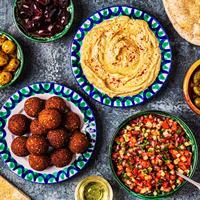
Middle Eastern pickles and sauces land in grocery
As Brits traverse the globe through food, Korea, Japan and Malaysia are among the hottest destinations. Other regions, however, are less travelled. One is the Middle East. It’s part of what Worldpanel by Numerator classes as “other international” – worth 5.7% of the ambient cooking sauces category and just 0.5% of chilled ready meals [52 w/e 9 August 2026].
One might assume there’s little demand for Middle Eastern flavours in the UK beyond houmous and lamb kebabs. That assumption may be enforced by the fortunes of Calo, the Middle Eastern meal delivery player that in May ended its UK operation, after a little more than a year.
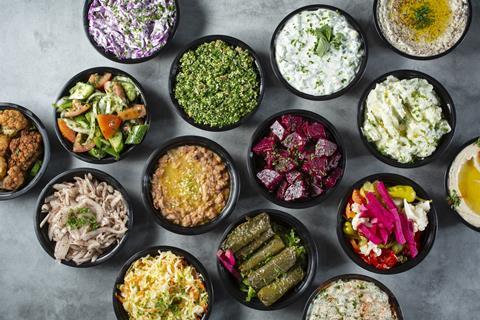
But industry experts insist there’s plenty of promise for the myriad cuisines found in the geopolitical region that encompasses Egypt and almost all of west Asia. “Middle Eastern food includes a wide range of traditions from countries including Saudi, Iran, Iraq, Lebanon, Syria and Israel. The region includes many different national and regional traditions, ingredients and cooking methods,” explains Eszter Somogyi, USA Rice Federation director of Europe, Middle East and Africa.
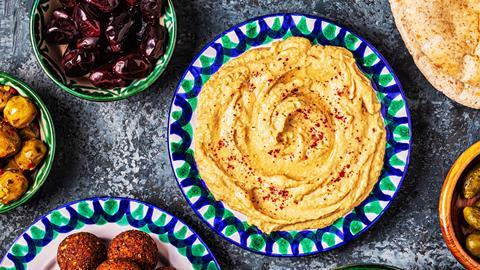
“In the UK, dishes such as falafel, houmous and shawarma bowls are already familiar, with popularity in ingredients such as tomatoes, chickpeas, rice and herbs helping Middle Eastern flavours appeal to consumers who look for fresh, flavourful and plant-focused meals.”
Rich diversity of dishes
Oscar Runeland, strategy director at branding and design agency Haines, points to the “rich, diverse and fiercely defended gastronationalist identities” across the Middle East.
“For culinary purposes, the term Eastern Mediterranean is more helpful, as it more intuitively conjures up fresher and lighter preparations based on fish, seafood, herbs and vegetables, as delivered in Athens, Beirut, Istanbul, Tel Aviv and Thessaloniki,” he says.
“By adding Saudi Arabia and the wider Arabian peninsula, the Middle East as a term throws darker, stronger spices into the mix, alongside a dominant role for lentils, fava beans and lamb barbecue.”
This diversity has been helping to inform NPD. Most recently, Gosh’s expansion of its Super Plants range in September included Middle Eastern Inspired Three Bean With Lemon & Garlic burgers. At the start of 2026, Mrs Elswood grew its pickled vegetable portfolio with a three-strong Made for Mezze range – developed in part to tap growing interest in Middle Eastern cuisine. Plus, last November, Merchant Gourmet teamed up with cook Sabrina Ghayour – author of the Persiana cookbooks – for microwavable Persian Style Rice & Lentils.
Then, of course, there’s Israeli-British restaurateur and food writer Yotam Ottolenghi. In February, his Ottolenghi brand won listings with Sainsbury’s and Ocado for Pomegranate Harissa, Miso Pesto, Roasted Aubergine & Tomato Sauce and Shawarma Marinade.
Those lines debuted in 2024 in Waitrose, with Ottolenghi continuing to innovate with a strong Middle Eastern influence. In the past year or so, the brand has rolled out the likes of Black Garlic & Scotch Bonnet and Preserved Lemon marinades, Pickled Carrot & Kohlrabi Slaw and Pomegranate Harissa Olives.
These launches are helping to drive greater interest in food from the Middle East, says Meg Matthews, head of marketing at Datekin, a Saudi Arabia-inspired snacks brand. “World cuisine’s centre of gravity is shifting in the UK, and the Middle East is leading it. You could credit Ottolenghi for some of that – for proving fruit & vegetable-led Middle Eastern food could be indulgent, comforting and visually interesting.”
African cuisines underserved in UK supermarkets
Like the Middle East, Africa is arguably underserved by shoppers. The planet’s second-largest continent accounts for just a tiny fraction of UK grocery sales. African is one of the cuisines that form the sector Worldpanel by Numerator calls “other international” – which shifted a mere 5.6% of total ambient cooking sauces in the past year [Worldpanel by Numerator 52 w/e 9 August 2026].
Nevertheless, Dan Sparshatt, sales director at Golden Acre Foods, points to “significant potential” for cuisine from west African nations such as Nigeria, Ghana and Senegal.”
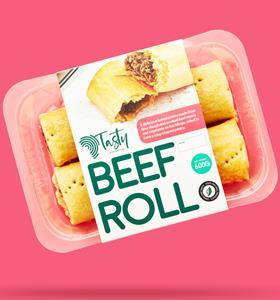
Beef Roll
Launch date: September 2026
Manufacturer: Tasty African Food
Here’s a Nigerian take on a sausage roll, courtesy of restaurant chain and ready meals maker Tasty African Food. Beef Roll (rsp: £3.99/200g) is seasoned minced beef wrapped in soft, slightly sweet pastry.
“It’s the sort of everyday snack you’d find in bakeries and roadside kiosks in Lagos,” Tasty African Food says. “For a British shopper, the format needs no explanation. The difference comes when they taste the seasoning.”
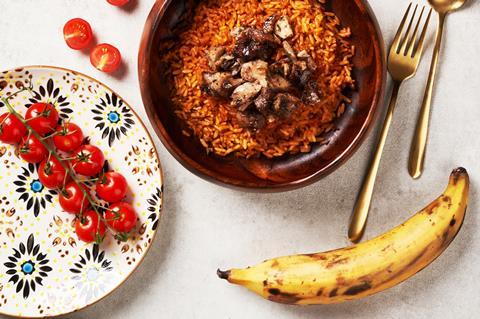
The UK’s changing demographics are influencing the African foods available in supermarkets and broadening a category,” he says. “We’re now seeing a much stronger west African influence, with dishes such as jollof rice becoming increasingly familiar to mainstream consumers and convenient formats such as jollof rice pouches appearing in UK supermarkets.”
Other businesses have also spotted the potential of west African cuisine. Take Tasty African Food, the restaurant chain that also makes a range of ready meals. Sales are looking “strong”, says CFO Simi Olaleye.
One reason is the UK’s evolving demographics. “The 2021 census recorded 1.5 million black African people in England and Wales, alongside around a quarter of a million people identifying as mixed white and black African. That’s a sizeable audience.”
Convenience is another reason, Olaleye adds. “A lot of the dishes people love take time. Students, young professionals and shift workers want the food they grew up with, but they don’t necessarily have an afternoon to make it from scratch.”
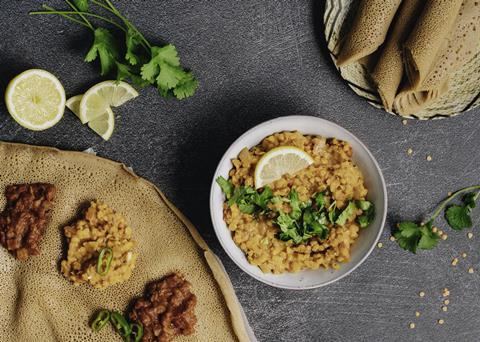
Home cooks can also swiftly prepare dishes from the other side of the continent – thanks to challenger Saida’s Kitchen and its cooking sauces such as Somali-Style Sweetly Spiced Tagine Sauce and Ethiopian-Style Hot Spiced Tagine Sauce. “East African food is currently underrepresented in the mainstream. However, consumers are beginning to take notice,” says founder Saida Bairak.
There’s still work to be done to improve Brits’ knowledge of African food, suggests Abi Adefisan, co-founder & director of Yumchop, DTC supplier of Afro-fusion ready meals. One of the biggest misconceptions of African fare “is simply that it is spicy”, she says. “It actually builds flavour through combinations of bold ingredients and spices.”
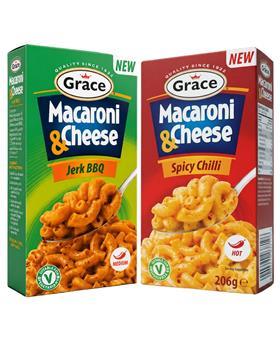
Macaroni & Cheese
Launch date: September 2026
Manufacturer: Grace Foods UK
Grace has expanded its ambient Macaroni & Cheese range with Jerk BBQ and Spicy Chilli (rsp: £2/206g). Jerk BBQ promises “warm, smoky Caribbean flavours”, while Spicy Chilli offers “a hotter take on the comfort food”.
Both can be served as a quick meal or a side dish. They launched in Tesco last month, alongside Grace Pineapple Jerk BBQ Sauce (rsp: £2.40/300g), to bring “a fruity Caribbean twist to barbecued and grilled food”.
Tropical Sun: from supply chain solution to £70m world food brand
This year marks Tropical Sun’s 30th on grocery shelves. Since its launch in 1996, it has become a £70m player in retail, boasting more than 700 SKUs across categories from canned goods and cooking sauces to soft drinks and snacks.
The brand is the brainchild of Wanis International Foods, which was founded as a greengrocer in 1946 by Tulsidas ‘Mr Wani’ Wadhwani in north London.
When members of local immigrant communities asked for fruit & veg from their homelands, Wadhwani began to source and import the likes of plantain, chayote squash and yam from Africa, Asia and the Caribbean.
During the frequent power cuts of the 1970s, stock would go bad due inadequate refrigeration – so the business pivoted to importing ambient items.
The problem was “if an overseas supplier was unable to fulfil an order, products could disappear from shelves for months at a time”, explains Emma Macorison, Wanis communications manager.
The led to Tropical Sun’s creation “as a solution to supply chain issues”, she adds. “By creating its own brand, Wanis could build a consistent range rather than relying on the availability of third parties, while also taking control of quality.
“The idea was straightforward: to bring together flavours of the world, from sunshine countries, under one trusted brand.”
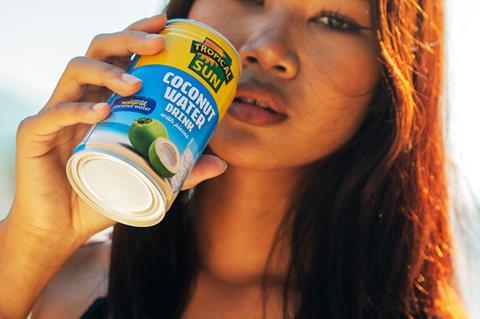
It continues to this day to offer traditional lines from those “sunshine countries”. Take its Processed Cheese in a 300g can. “Tinned cheese became a Jamaican staple for a very practical reason: in a hot climate, before refrigeration was widely available, it could be stored safely for long periods”, Macorison explains.
“What began as a practical solution has become something far more meaningful: a tradition passed down through generations and a powerful comfort food for Jamaican families and the diaspora, carrying with it a real sense of home, heritage and nostalgia.”
Tropical Sun is currently found in the world food aisles of Tesco, Sainsbury’s, Asda, Morrisons, Ocado, Co-op and Iceland.
Its aim is to push “further into mainstream without losing authenticity or the love and trust of our core consumers”, says Macorison.
“Beyond our core base, a broader cultural shift is expanding the market. Appetite for global flavours is growing across the whole population, fuelled by travel, Social media and foodservice.”
East Asian cuisines buoyed by viral recipes
In world foods, three cuisines command the lion’s share of value sales. That’s Italian, Indian and Chinese. In cooking sauces, they’re worth a combined £722.4m of a £980m category [NIQ 52 w/e 11 July 2026]. In the £2.5bn chilled ready meals market, the trio commands £1.4bn [Worldpanel by Numerator 52 w/e 9 August 2026].
But it’s cuisines like Japanese and Thai that are arguably sparking most excitement, with volume sales of their cooking sauces up 7.5% and 19.6%, respectively [NIQ].
One driver is social media – “one of the most powerful engines of world food discovery”, according to Dan Sparshatt, sales director at Golden Acre Foods. “TikTok and Instagram expose consumers to dishes, ingredients and food cultures they may never previously have encountered, and that can translate into demand at supermarket level.”
Nicola Bertinelli, president of the Consortium of Parmigiano Reggiano, echoes Sparshatt’s view. Social media is increasingly important in taking global cuisines from specialist food trends into the mainstream, she says. “TikTok in particular has demonstrated its ability to turn a recipe, ingredient or dish into a cultural trend almost overnight.”
When it comes to social media, east Asian dishes are especially suited, suggests Dominique Woolf, founder of Woolf’s Kitchen. “Colour, texture and theatre work brilliantly on social: glossy noodles, ramen, dumplings, vibrant curries, Korean fried chicken and loaded rice bowls,” she says.
Popular Chinese condiment crispy chilli oil “is particularly visual,” she adds. “A final spoonful over eggs or noodles immediately adds colour, texture and appetite appeal.”
Zoe Evans, social media manager at Itsu Grocery, highlights viral dishes like “textural Asian-inspired recipes, such as crispy rice salads, brothy rice dishes and post-gym macro-friendly meals, alongside creative fusion hacks that make familiar formats feel new”.
Other world cuisines can also benefit from TikTok and the like, of course. “Anything loaded, layered or dramatically finished – think a fully dressed curry naan wrap or a stacked poppadom stack – performs best, because these visually appealing, indulgent, shareable formats are tailor-made for social exposure,” says Shezad Aslam, MD of Indian cooking sauces brand Aagrah Foods.
“Vibrant, colour-forward dishes travel best on video, which is exactly why south Asian and west African plates, with their layered spice colour, do so well.”
Focus On World Cuisine
DOWNLOADDownloads
Focus On World Cuisine
PDF, Size 17.46 mb






No comments yet