



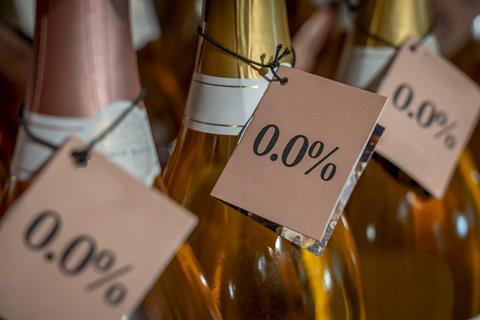
It’s a time of exciting potential for the non-alcoholic drinks category. What started as 0% versions of beer, spirits and wine, has expanded into a segment that includes everything from matcha to lion’s mane.
New data from Ocado Retail this month revealed that sales of functional drinks, such as kombucha, kefir and matcha, have surged by 54% on last year. With Gen Z driving this trend (almost two-thirds consuming functional drinks several times a month), it also reflects a wider lifestyle shift toward more healthy ways of socialising.
Yet for what is one of the most dynamic areas in drinks, the language around alcohol-free remains oddly underwhelming. Non-alcoholic is positioned in direct opposition to many companies’ core alcoholic portfolio, unintentionally positioning it as lesser. Sober-friendly, free-from. Why this negativity? Even functional drinks sounds clinical, worthy and faintly joyless. It suggests utility rather than pleasure.
Sticking to this language – and the associated approach to brand – is limiting. Arguably, the new Lucky Saint Lime and Sea Salt with Electrolytes isn’t even a non-alcoholic beer but a health drink. Or maybe neither: it’s an innovative beverage with flavour and functional ingredients that deserves to sit in a category all of its own. Consumers are buying these drinks for flavour, ritual, moderation, energy, curiosity and social occasions. They are choosing what the drink adds, not just what it removes.
Retailers, meanwhile, don’t seem to know how to position the products on shelf or online. A quick visit to the big supermarkets’ websites, and you’ll find this category at Tesco under “wellbeing” or “wellness”; at Sainsbury’s in “dietary” or “vegan”; at Asda in “adult soft drinks”. In the US, Walmart has opted for the more progressive ”modern soda”. This inconsistency matters because it tells shoppers that this is a category without a clear or compelling home.
Define a market by what it sells
Instead of defining this market by absence, brands and retailers should sell it by occasion, mood and benefit. The most useful organising principle is not alcohol-free or functional, but moments: the midweek wind-down, the post-gym reset, the pre-dinner aperitif. Retailers already know how to do this – they create summer edits, match-ready bundles and barbecue hubs full of storytelling. Why not bring the same imagination to this category?
Some brands are already pointing in the right direction. The best new entrants do not look apologetic or medicinal – they feel summery, lifestyle-led and social. They lean into moments, not restrictions.
Lo Bros kombucha, for example, talks about bottling the joy of summer with its Pineapple & Lime release. Others are dialling up the emotional or beneficial payoffs of their drinks through experience and storytelling – think Trip’s collaboration with Calm or Heywell’s “fizz with benefits” narrative. Kin Euphorics, meanwhile, is expert at explaining the effect of its ingredients through emotive visuals and amplifying its broader brand promise of “elevate your every day, from dusk till dawn”.
These approaches are far more persuasive than a list of what is missing. They reflect how people increasingly use these drinks: to pace a night out, to bookend an evening or to swap in for a coffee.
So why not retire the non-alcoholic term entirely and opt for something that captures not just the liquid but also the role these drinks play in people’s lives? “Free spirit”? Nicely conceptual, but perhaps still too much linked to what these drinks are not. “Third drinks”, “new pour”, “unclouded”?
Whatever term we land on, brands and retailers should embrace the evolving attitudes of their customers around wellbeing, moderation and social connection. The goal is not simply to replace alcohol – it’s to redefine what drinking looks like.
Steve Pearce is managing director at Love

No comments yet