


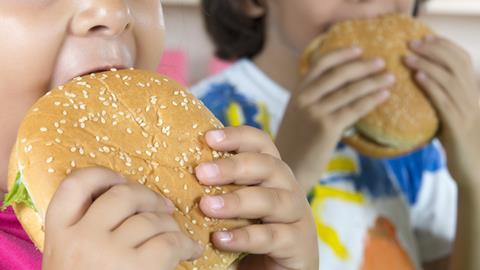
I recently discovered that I grew up in London’s most overweight borough. According to Public Health England’s latest figures (from 2023/24), Barking and Dagenham has the highest proportion of childhood obesity of all London boroughs, at 29.3%.
The borough with the lowest proportion was Richmond upon Thames (13.3%), which comes as a surprise to no one.
This tallies with a childhood where my mates and I ate the same school lunch every day for years: the culinary masterstroke that was chips with grated cheese and baked beans. Topped with a single Bernard Matthews Golden Drummer, just to bring a bit of class to proceedings.
Then for dinner it’d be frozen microwave pizza or, if mum was feeling creative, some frozen mince fried off with a jar of bolognese cooking sauce.
I’m sure similar culinary experiences were par for the course in neighbourhoods across the country – but they were almost certainly more prevalent in less privileged areas. That’s why it was heartening to see the news this morning that the government is aiming to roll out healthy food pilot schemes aimed at tackling obesity in deprived areas.
After all, it’s never been a secret that children in these neighbourhoods are twice as likely to be obese as those in the wealthiest ones. As long ago as 2016 (and very likely much longer ago still), the Obesity Health Alliance was warning of “a looming significant weight gap between the poorest and wealthiest primary school-aged boys living in England”.
The junk food feedback loop
Pinpointing the reasons for food deserts (where there is a lack of affordable healthy food and comparatively high levels of unhealthy food) and the resulting health inequalities is extremely complex. But numerous social, economic and environmental factors, such as lack of facilities, stress, time pressures and price all make it harder for people from poorer areas to eat well and keep themselves healthy.
Another factor is the unsurprising correlation between deprivation and the number of fast food shops in a community. It’s not just easier access to junk food, it’s also the increase of advertising for it, too. Research last year by the University of Liverpool in collaboration with campaign group Bite Back found “junk food ads appeared six times more frequently per kilometre in the most deprived areas compared to the least deprived”.
And guess what? Advertising works. Otherwise, brands wouldn’t spend billions on it every year. So, if one local community plays host to considerably more burger adverts than another, it seems pretty clear what the outcome is going to be.
That’s why it was hugely disappointing that OOH advertising was not included in the new HFSS marketing rules that came into force on Monday. And unsurprising to see more than 50 health groups join forces within days to tell the government the advertising ban did not go far enough, urging them to remove “loopholes” and extend the rules to include outdoor media.
While the government can certainly be taken to task for watering down the advertising regulations, it is at least trying to do something about the vast health inequalities between wealthier and poorer areas with its new targeted pilot schemes. And it’s great to see the OOH sector will be included too – many in grocery have long contended that QSRs and other fast food outlets get too much of a free pass when the health microscope is applied to the food and drink industry.
Common sense and practical solutions
While precise details on just what these interventions are going to look like are a little hazy at this stage, having chief medical officer Chris Whitty as a driving force behind the strategy bodes well.
According to our original story: “Chris Whitty in particular has been pressing on this issue. The idea is that these pilots could go from a test, which would be able to trial ideas such as health reporting before it’s rolled out nationally, requiring legislation through parliament. The idea is for these to be trialled in areas that have become known as food deserts.”
It was also reported that minister for food security Angela Eagle wants to get these pilots rolled out relatively quickly, with the government working alongside the food industry to “move quickly on practical solutions”. This means we might not have to wait years for any positive outcomes, which was always one of the issues with the government’s much-vaunted food strategy.
Yes, it seems like common sense to target the areas that need it most as soon as possible, but common sense has not always been in bountiful supply for either this government or the numerous Conservative iterations that preceded it.
Whitty has already described the government’s response to health inequalities as “achingly middle-class”. Which is true. But it could also be applied to the government’s response to almost any inequality issue. Of course, it’s unlikely a great deal will actually change. Poor people getting the raw end of the deal is, unfortunately, standard practice. But hearing those words come from such an influential figure ignites a small amount of hope.
The fact that where a child lives can have such a detrimental effect on their health is a stain on our society. Maybe, just maybe, these food pilots will be the first steps toward a genuine, concerted effort to help kids from Dagenham enjoy similar prospects – and menus – to those in Richmond.




No comments yet