



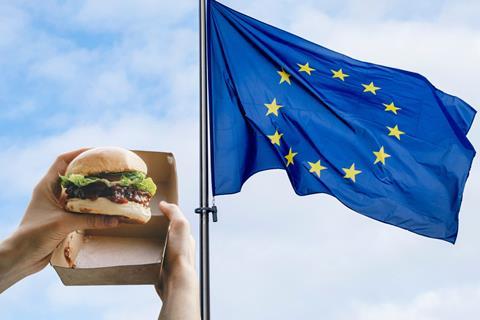
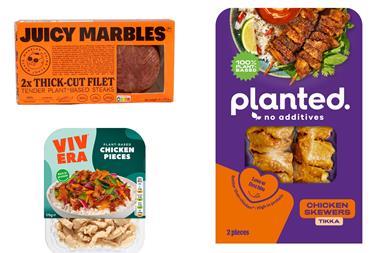
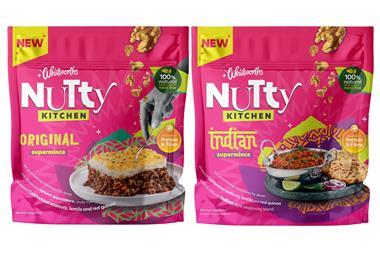
The European Union has restricted food labelling for plant-based foods in a landmark decision praised by conservatives and lambasted by green groups.
Under the new agreement, 31 animal-associated words including ’chicken’, ‘beef’ or ‘pork’ and cuts terms like ‘breast’, ‘thigh’ or ‘drumstick’ will be banned. The likes of ‘burger’, ‘sausage’ and ‘nuggets’ would still be permitted.
The European Parliament and the Council of the European Union reached the provisional agreement on Thursday although it still requires the backing of the European Commission, as well as the governments of the 27 member states, to come into force.
This comes following months of legal back and forth in the European parliament over the decison and what should be included in the ban.
It follows in the wake of the UK Supreme Court’s controversial decision to prevent Oatly from registering its trademark ‘Post Milk Generation’ due to its inclusion of ‘milk’.
“The agreement reached today is a major victory for our farmers.” said Céline Imart, a Les Républicains MEP and French cereal farmer who sponsored the plan, in a statement released on X.
“Secure contracts will guarantee them a dignified place in the value chain, and the requirement for a mediation mechanism will safeguard their income in the event of a dispute with their premier buyer.”
The lawmaker added that it would recognise farmers’ work and protect products against unfair competition.
The 31 restricted words are: chicken; beef; turkey; duck; goose; lamb; beef; pork; bacon; goat; veal; poultry; mutton; ovine; steak; ribs; rib-eye; T-bone; rump; liver; chop; wing; breast; thigh; shoulder; flank; loin; tenderloin; shank; drumstick; and brisket.
Legislators also agreed to extend a pre‑emptive ban to novel foods, including cellular agriculture. A three‑year transition will allow producers to clear existing stock and adapt once the rules enter into force.
Read more
-
EU talks on ‘meaty’ name ban for plant-based foods collapse
-
A step to the right: why the EU’s veggie burger ban is bull
-
Oatly ‘disappointed’ as court finds in favour of Dairy UK
Critics said the move would incur hundreds of millions of euros in rebranding costs and lost revenue, create uncertainty across languages and markets and disproportionately affect SMEs.
Rafael Pinto, senior policy manager at the European Vegetarian Union, which represents 600 organisations across Europe, said the agreement went against “competitiveness, innovation, food security, affordability, simplification”.
“It is incomprehensible that our policymakers are focussing on made up issues, when the world is at crisis,” Pinto added. “We are happy that some common sense prevailed in the most frequently used words, but banning 31 words is not a censorship that makes Europeans proud.”
ProVeg International welcomed the avoidance of a broader, more draconian ban, but argued the new restrictions were unnecessary adding that “new rules must remain proportionate and legally coherent”.
“There is no evidence of widespread consumer confusion where products are clearly labelled as plant-based or vegan,” said Jasmijn De Boo, global CEO of ProVeg International. “Removing familiar terms does not improve transparency, it reduces clarity and increases friction at the point of purchase.”
This was echoed by Marisa Heath, CEO of Plant-based Food Alliance UK, who called the restrictions “unnecessary and a waste of time”.
“Nobody accidentally buys plant-based products thinking they are meat and all this time and effort has been about protecting the interest of the meat industry under the guise of ‘consumer confusion,’” Heath said. “All it does is reduce consumer choice and threatens a growing industry undermining economic growth and innovation within that industry when the wider EU economy should be seeking growth wherever it can.”
“Yes, it’s a setback, but it’s also an opportunity to create a more ownable space for plant-based foods rather than only being seen as ‘meat mimics’. It brings us back to the bigger picture – these foods are rich in protein and fibre, are typically low in saturated fat, and can help address the health and food security challenges we face today and importantly, consumer demand for them is there. I am looking forward to continuing this conversation at our next category workshop on 25th March, bringing together over 30 organisations from across UK retail, brands, suppliers and NGOs to help shape the future of the category and where we collectively go next.”
Indy Kaur, founder of Plant Futures acknowledged that the move was a “setback” but added that it was also ”an opportunity to create a more ownable space for plant-based foods rather than only being seen as ‘meat mimics’”.
Despite the ruling, Ali Morpeth, co-founder of Planeatry Alliance, said she expected far more diversity in the “protein landscape” in a LinkedIn post.
“We’re already seeing that happening across the EU as businesses start tackling Scope 3 and diversify their supply chains to head off the effects of climate volatility on supplier and ingredients,” Morpeth continued. “The job of policy should be to guide that evolution in ways that support farmers, improve public health, strengthen food security and reduce environmental pressure.”
No comments yet