





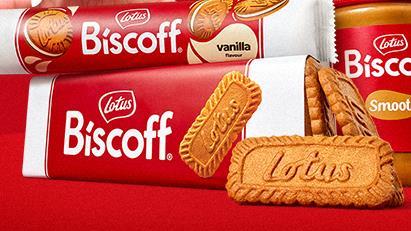
If you’ve been on TikTok in the past month, chances are you’ve seen – or even tried – the ‘Japanese cheesecake’ trend. The craze has seen foodies eagerly adding Biscoff biscuits to Greek yoghurt to make a simple, two-ingredient dessert, which purportedly tastes like cheesecake.
While it’s understood that the trend started in Japan (hence the name), it has quickly become a worldwide phenomenon. In the UK, year-on-year value sales of Biscoff biscuits have rocketed by 10.9%, on volumes up 30.2% [NIQ w/e 17 January 2026].
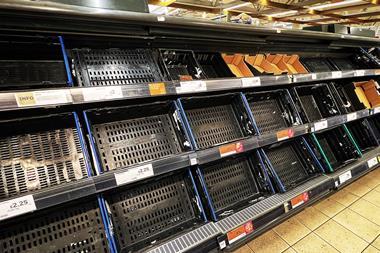
Meanwhile, analysis of The Grocer’s data reveals that out-of-stocks of Greek and natural yoghurts have increased. Across the traditional big four and Waitrose, 34 lines were out of stock at the start of the month [Assosia w/e 1 February], compared with 43 this week [Assosia w/e 9 February].
As ever, retailers’ social media teams were quick to jump on the trend, posting their own takes on the dessert to TikTok. Sainsbury’s, for instance, combined soft cream cheese, lime zest and ginger snap biscuits with yoghurt to make a key lime pie-inspired dessert. Waitrose added ginger biscuits to Greek yoghurt and topped it with honey. Morrisons mixed pistachio creme and Biscoff biscuits with yoghurt, grating chocolate over the top.
Missed opportunities
Brands including Biscoff and Fage also posted their own Japanese cheesecake recipe videos to TikTok. However, both suppliers and supermarkets missed a glaring opportunity to further drive the trend forward through in-store and online PoS activations.
Seemingly, Sainsbury’s was the only retailer to add a dedicated “make your own viral cheesecake” section to its online store, giving various yoghurt and biscuit products their own dedicated landing page. Presumably, this isn’t too complicated to do, which raises the question: why didn’t other supermarkets follow suit?
There has also been a distinct lack of activity relating to the trend in stores. For obvious reasons, merchandising chilled and ambient products together isn’t easy in a bricks-and-mortar store (although it is possible, as this Dolmio display shows). Retailers could also have rolled out signage to direct shoppers between the yoghurt chillers and biscuit aisles, while biscuit and yoghurt brands could have driven further sales through promotional pricing or other smart partnerships (hats off to PG Tips and McVitie’s for showing how it can be done).
Last month’s ‘Weetabix dunkables’ trend, where shoppers dipped their bix in melted chocolate, was another missed opportunity. It better lent itself to in-store activations than Japanese cheesecake, as both ingredients were ambient products: Weetabix could have teamed up with Cadbury Dairy Milk on a co-branded bay, for instance. But it, too, failed to realise its full potential because neither the brands involved nor the retailers threw their full weight behind the trend.
Of course, speed is of the essence where social media trends are concerned. Reactivity can be challenging, as these activations need to go through various layers of sign-off – but such feats are possible.
In 2021, for instance, Weetabix followed up its viral ‘beans on bix’ tweet with an in-store PoS activation at Sainsbury’s Kiln Lane Superstore in Epsom. Weetabix and Heinz Beanz were showcased as the ‘Love Story of the Year’ in ahead of Valentine’s Day. Surely, it could have installed a similar activation this year for the dunkables?
As Taryn Connolly, senior account director at Ceres PR, points out: “The brands that win [on TikTok] aren’t chasing every trend… they’re ready when one lands.”
Beyond simply joining in on TikTok, brands should be taking it to the next level and thinking about how they can bring shoppers’ favourite social media trends to life in-store.


No comments yet