




It’s been another busy week on The Grocer.
Good or bad, Tesco’s annual results will always be a big story for The Grocer (and our readers). And the news is resoundingly positive for Britain’s biggest grocer, though CEO Ken Murphy was understandably cautious about the outlook amid “further uncertainty for consumers and the economy more broadly” linked to the US-Iran war. Tesco also used the opportunity to update its “strategic ambitions” and the news was also the focus of my leader.
As Morrisons was announcing plans this week to cut 200 head office jobs by using AI, it was also noticeable how Tesco’s AI and data team seemed focused not on automation but on dialling up its already powerful personalisation. Tesco has also highlighted another £500m in cost savings for the year ahead and no doubt AI will play a part there, of course, but it must have been demoralising for Morrisons staff to see CEO Rami Baitiéh make such an overt link between AI and the 200 head office job cuts it announced this week.
Interestingly Murphy refused to be drawn on the prospect of mass protests by angry farmers in the wake of soaring fuel and fertiliser costs (they’re already happening in Northern Ireland), but they would surely be better advised to follow Tesco’s example by focusing on availability. It seems like self-sabotage to be introducing their own blockades (on RDCs), potentially impacting relations with motorists, retailers as well as the government – especially since farmers already receive significant subsidies on red diesel.
What’s the government to do? No sooner had Rachel Reeves announced a “bold” bailout to help food companies tackle the threat from soaring costs, than industry bosses were slamming the Chancellor’s package, which went “nowhere near far enough”.
The logistics sector was particularly incensed. The Cold Chain Federation hit out at government inaction on the Middle East crisis, accusing ministers of being “deaf” to the concerns of the cold chain and hauliers, who face a “dual diesel burden” due to the need to fuel wagons and transport refrigeration units (TRUs). CEO Phil Pluck is calling for action on fuel duty concessions “within days”, or else food inflation could “become uncontrollable”, he warned.
A big week in grocery
Exporters are also tearing their hair out over government inaction RE the new EU SPS deal. Despite repeated calls for a phased transition to new rules, ministers have rejected the proposal, saying only that it has been “listening to businesses”, and adding that “we know some require longer to adjust to the new arrangements and will continue to work with them to ensure a smooth transition”.
We also exposed one of the perhaps unforeseen consequences of the realignment: the fact that the UK’s lab-grown and other novel foods boom is set to be strangled at birth under the proposals. No doubt the government will receive plenty of flak about that.
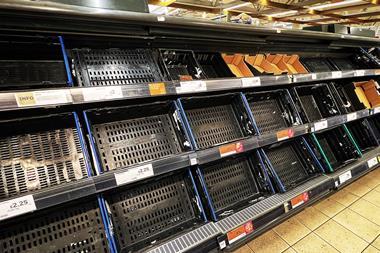
On the other hand international trade editor Kevin White pointed out that the government is in a ‘damned if you do damned if you don’t’ situation with regards to announcing contingency planning in the event of shortages of food supply chain essentials such as CO2 gas. Will we see empty shelves in the summer? Well, possibly – but Kevin argues a spike in food price inflation is the bigger concern.
Amid the threatened return of food price inflation, our cover story on the decline in supermarket value ranges seems even more topical. It was back in February that The Grocer revealed budget own-label ranges were in decline at many of the UK’s biggest supermarkets, and we’ve followed that reporting up this week with new research and a deeper dive into just why this is happening, the effect it will have on shoppers and what the future holds for these rather unloved – but, for many people, crucial – ranges.
Amid so much misinformation, one scare story we were able to debunk was a Bank of England warning that surge pricing could soon be seen in supermarkets. The media seized on the BoE warning with glee, but data editor Elinor Zuke explained forcefully why there’s no chance of surge pricing anytime soon.
Good news and bold moves
It’s also been a pivotal week for the Groceries Code Adjudicator. The headline story was the news that Asda and Morrisons tumbled down the rankings in the annual GSCOP retailer survey. But you might also have missed the fact that the GCA has packed his bags for Defra and a possible expanded role. Chief reporter Ian Quinn exposed significant concerns that have been raised over the wisdom of the move, and reveals that while farmers are hoping for new powers they may not get what they hope for.
Another highlight was our across-the-board coverage of the ASA’s first rulings on the HFSS ad ban. It’s been widely anticipated across the board, but now they’re in, and it looks like there are still lots of things that need to be ironed out. As well as covering the story itself, we also carried an op-ed from Guy Parker, chief exec of the ASA, and looked at it from our own perspective as well, with George Nott explaining why the devil really is in the detail on this one.
We also sat down with Jason Geary, CEO of Geary’s Bakeries and the mastermind behind Jason’s Sourdough, to discuss his eponymous brand’s incredible rise to become the UK’s third-biggest bread brand, as well as happy sourdough accidents and criticism from the Real Bread Campaign.
And finally, amid so much bad news right now for farmers, including warnings from the boss of Ornua of a “very, very challenging year” ahead and McCain’s profits slump, it’s good to be able to highlight some good news from challenger dairy brand All Things, raising a further £3.6m to invest in its supply chain and farming partners (and using the cash to buy the farm and production facility for cottage cheese). It’s a big and bold move. And the brand is flying. Unbelievably, it reckons it will sell five million pots of cottage cheese in its first year with revenues of £7m. It only launched the SKUs in January and is the best-selling cottage cheese in Sainsbury’s. And its butter isn’t doing badly either, with a launch in Tesco set for May.
Of course there are loads more brilliant stories in this week’s magazine. And even more on thegrocer.co.uk. But those are some of my faves. And we would love to know your thoughts on our coverage. Or is there anything we’ve missed? We’re all ears! Please get in touch via LinkedIn or adam.leyland@thegrocer.co.uk.







No comments yet