




Post pandemic, direct-to-consumer orders are broadening – and dairy businesses are making the most of it
DTC dairy has been through its fair share of ups and downs since its pandemic gold rush. But judging by the performances of some of its leading businesses, it’s currently on an up.
Modern Milkman, for instance, made no secret of its desire to crack the US market when it spoke to The Grocer in May, while Milk & More grew its customer base by more than 30,000 in the first quarter of 2025 alone.
Then there’s Cotteswold Dairy. Its doorstep sales have reached levels last seen during the pandemic. It has so far shifted 39 million glass bottles in 2026 – just 5% shy of the 41 million in 2020. There’s still plenty of time remaining this year for the business to surpass its pandemic high.
This picture of success covers national and regional players. Some are pureplay dairy. Others are not. Riverford Organic Farmers is an example of the latter. It offers a wealth of groceries, including organic fruit & veg, food cupboard and chilled goods. Dairy is one of its strongest-performing categories at the moment: sales are up 9% in value and 4% in volume.
“Milk continues to lead with 5% more units sold than last year, and other dairy products, including cottage cheese and kefir, are performing really well,” says Jenny North, Riverford e-commerce director.
Driving this are customers spending more of their grocery budgets with them as opposed to the supermarkets, she adds. “We are seeing this in a number of categories, including dairy, fruit and meat.”
That Riverford’s portfolio is eclectic is worthy of note. To sign up and maintain subscribers, a broad basket of goods is key. During the pandemic, consumers were most interested in essentials, and many DTC companies rationalised their ranges accordingly.
Now, consumers have become more comfortable buying a “much broader range of food”, stresses Jenny Thomason, Modern Milkman head of commercial UK. The shift is due to changing consumer perceptions, she believes, with many now looking to use DTC firms for their regular food shops.
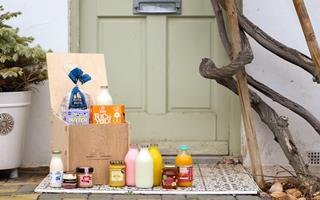
The Lancashire service that started in 2018 as a milk round now sells Jolly Hog bacon and sausages among other non-dairy options such as smoked salmon, tea and coffee and bread – making more than 300,000 deliveries a week.
The business continues to grow its portfolio. “We’ve expanded our breakfast and grocery offering over the past few months, which has extended into categories such as fresh meat and bakery,” Thomason adds.
“This isn’t about competing with hyper-convenience but rather to become part of the planned weekly household shop. That means broadening the basket around the products customers buy regularly while retaining the core values of trust, provenance and sustainability to deliver consumers a convenient recurring service.”
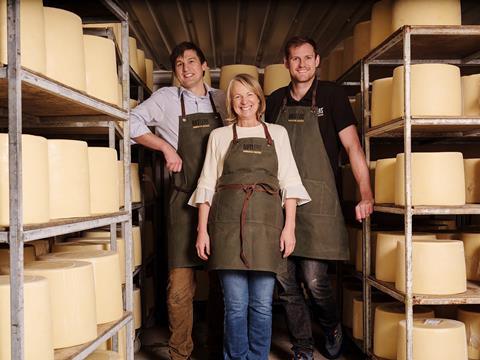
Matthew Hall, the fourth-generation owner of Butlers Farmhouse Cheeses, agrees that it “isn’t about competing with supermarkets for the weekly shop. It’s about giving consumers something they can’t easily get elsewhere – more choice, discovery, provenance and occasion-led experiences.” Butlers Farmhouse’s “returning customers have increased by 21% since Covid, showing that once people discover the quality and variety available, there’s a genuine appetite to come back”, he adds.
Changing expectations
It’s a strategy that many DTC suppliers have adopted to reflect changing consumer preferences and purchasing habits. “DTC providers that successfully adapt to changing consumer expectations are likely to be well positioned to attract new customer groups and support future growth,” says Justin Young, operations director at Cotteswold Dairy.
Milk & More is a salient example. Having been offloaded by Müller in 2024 as a loss-making enterprise, it recorded a 110.3% EBITDA uplift in its first year under Freshways’ ownership, swinging from a loss of £18.4m to £1.9m profit. Its 700-plus team now makes around 600,000 deliveries of milk and groceries to more than 250,000 customers a week.
Freshways credits the turnaround in part to widening its area of service and offering a “more compelling” product range that includes fruit juice, fruit & veg, bread and eggs, as well as dairy products.
“By combining the friendly neighbourhood milkman with an unbeatable innovative product offer from the very best British food producers and the convenience of home delivery, we can win new customers, grow the business and make sure the great British milkman is always around for future generations,” says Bali Nijjar, Freshways managing director.
Alongside the services that provide a plethora of goods, there’s still a place for smaller players that specialise in dairy, stresses Young at Cotteswold Dairy. Recognition should be “given to the hundreds of regional independent businesses that have formed the backbone of the sector for generations”, he says.
“Their ability to respond to local customer needs, provide a personalised service and develop trusted relationships within their communities remains a key differentiator – and it is often this direct relationship between business and consumer that helps maintain long-term demand.”
One such business is The Ethical Dairy, a small-scale organic cheese supplier at Rainton Farm in Dumfries & Galloway. More than 30% of its value sales come from DTC.
While The Ethical Dairy lacks the commercial heft of bigger rivals, it has carved a profitable niche for itself. That’s virtue of its high production standards and ethics of “treating the animals, the land, our environment and the people who work here with respect and kindness” – including the pioneering method of keeping calves with their mothers to suckle.
“A premium product with a story can sustain the costs of DTC fulfilment in a way a commodity product can’t,” says David Finlay, co-founder of The Ethical Dairy. “We recognised that for people who felt strongly about the separation of dairy cows and their calves, buying our cheese was a way to support an alternative approach.”
The Ethical Dairy’s welfare credentials have led to around 10% of its customers being either vegan or plant-based individuals buying cheese for family members. “People don’t buy cheese online for convenience, they buy it because they want to be part of something,” Finlay adds. “That something is the story, and the story has to be simple and powerful, something people can relate to.”
Abel & Cole took a leaf out of The Ethical Dairy’s book in June to launch Calf First Organic Whole Milk, sourced from farms using the cow-with-calf method, to react to increasing awareness of animal welfare and the environment. “The milk offers a new way to support a dairy model that puts calves first, while backing organic, pasture-based farming that works with nature,” says Ilyas Wouda-Deshmukh, Abel & Cole head of buying & trading.
Cutting packaging waste is another major sustainability target for Abel & Cole. It developed Club Zero Refillable Milk bottles in 2023 using recyclable polypropylene packaging, in a bid to ditch “brittle and heavy” glass.
“Since launching Club Zero, Abel & Cole has saved 1.4 million single-use plastic bottles, which equates to a total weight of 71 tonnes,” says Wouda-Deshmukh.
“Quick commerce demonstrated how easy it is to go wrong when you build consumer demand without a sustainable model”
Post-pandemic turbulence
It’s not been all plain sailing for DTC dairy since the pandemic boom, however. High-profile changes, such as Müller’s sale of Milk & More to Freshways Medina and the 2023 collapse of Pensworth Dairy, are powerful evidence of turbulence that continues to this day.
“Things like Covid accelerated our ability to scale up as it gave consumers a reason to try a new type of service,” says Thomason at Modern Milkman. “But recent months have brought challenges, with inflation and other economic pressures impacting consumers’ wallets – as well as supply chain difficulties.”
Taking notes from businesses that failed, Thomason says one of the biggest lessons has been knowing when to prioritise growth and when to prioritise profitability. “Quick commerce demonstrated how easy it is to go wrong when you build consumer demand without building a sustainable model.”
Building and maintaining infrastructure required to deliver services consistently can be challenging, she adds. “Marketing, brand development, product quality, operational infrastructure and labour all play important roles.”
Then there are the challenges of shipping perishable products. “It’s particularly challenging because consumers aren’t necessarily buying frequently enough to justify a delivery subscription in the way they might with Amazon Prime or a major grocery retailer,” says Hall at Butlers.
However, while noting “logistics haven’t fundamentally changed”, he agrees there have been advances in the technology for DTC dairy businesses since the end of the pandemic.
Platforms such as Shopify have “improved enormously”, Hall adds. “Consumers now expect the same seamless online experience they get from major retailers, but the technology has evolved to the point where smaller producers like us can deliver much of that functionality, too.”
AI is a further advancement. Modern Milkman uses it to drive efficiency and “savings for the consumer”, Thomason says. “Things like delivery routes, customer service and predictions of needs for the customer are all things we have been able to implement and improve on an ongoing basis as technology develops. Given we are a platform integrated into a logistics network, the technology has become increasingly unique to our model.”
That’s another big leap for DTC dairy post-Covid.




No comments yet