





Brits are turning away from UPFs and HFSS goods. But with definitions blurred, and indulgence still desired, it’s a mixed picture for food and drink
A strained plain yoghurt might not seem like the height of excitement. But Fage is one of the big movers and shakers in this year’s Britain’s Biggest Brands report. The brand has broken into the top 100 on the back of the highest volume growth in the ranking – up 37.4%. With a £54.9m gain, retail sales value is £177.1m.
In many ways, Fage sums up consumer attitudes to health. As a natural Greek yoghurt, it’s about as far away from a UPF as you can get. The brand also escapes the HFSS classification.
For former Vita Coco CEO and high-profile fmcg investor Giles Brook, that’s no coincidence. “Two major forces are shaping consumer demand: products that are better for you and better for the planet,” he says.
It would be easy to conclude this is the direction of travel for Britain’s biggest brands. Yet plenty of less healthy products are also achieving impressive sales gains. Monster and Red Bull – hardly known for their health credentials – are the fastest-growing brands in the top 100 by value.
So, what’s going on? To what extent is health driving growth for brands? And how do today’s shoppers even define health?
↑44 Fage
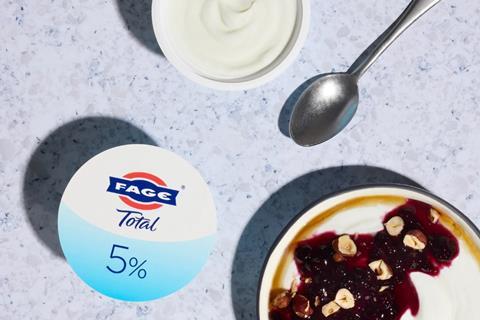
Shooting into the top 100 at 62, up from 106, is Fage.
Brits’ appetite for plain yoghurt seems only to grow each year. No wonder Fage has leapt into the top 100. No other brand in the ranking has grown value and volumes faster.
All the big brands say they are looking to improve their health credentials. Nestlé has “invested in nutritional science and product quality, while respecting consumer choice and enjoyment”, it explains. Pepsico says 59% of its UK snack sales – which include Walkers and Doritos – come from “healthier choices”.
Number five brand Warburtons points out it has been “investing in higher-fibre options”. Even Monster and Red Bull are leaning heavily on their zero-sugar lines.
Of course, there’s a commercial imperative for such behaviour –because the major supermarkets have committed to stocking healthier ranges. Tesco, for example, hit its target for healthier products to account for 65% of total sales by the end of 2025. CEO Ken Murphy is now looking to boost that figure further.
“Selling healthier products is increasingly in companies’ long-term commercial interest,” sums up Svet Lustig Vijay, senior research & campaigns officer of the Healthy Markets Initiative at ShareAction.
Read more:
Britain’s biggest brands 2026: the top 100
Britain’s biggest brands 2026: the challengers
He should know. Not-for-profit ShareAction has piled pressure on the likes of Tesco and Nestlé to boost their health profiles. At the same time, companies are facing pressure from the government in the form of restrictions on the display and advertising of less healthy products, as well as the 10 Year Health Plan.
“Meanwhile, litigation risks are on the rise globally with legal cases linked to ultra-processed foods already emerging in the US,” Lustig Vijay adds. “This shift is here to stay as long as obesity rates continue to rise and the demand for healthier products grows.”
For him, food and drink giants still have work to do to keep up with the direction of travel. “Investor pressure has driven stronger disclosure and targets, but progress remains uneven, with many companies lagging behind,” he argues.
↓15 Aunt Bessie’s
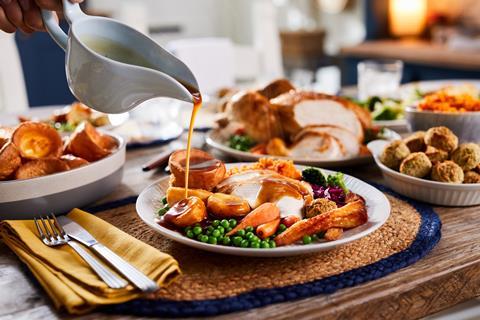
Barely clinging on in the top 100, at 98 down from 83 is Aunt Bessie’s.
Last year’s weather did harm to Aunt Bessie’s, which has lost £9m. Few people were in the mood for a hearty roast dinner during the summer’s extended period of sunshine.
In some cases, the lag is one of transparency. In November, ShareAction wrote to PepsiCo, Coca-Cola, Mondelez, Kraft Heinz, Kellanova and General Mills, urging them to follow the likes of Unilever and Danone in adopting internationally accepted nutrition standards when reporting the healthiness of their sales.
Still, what is accepted as a nutritious product is increasingly up for debate because the definition of health is evolving – internationally and within the UK.
The UK government uses the nutrient profiling model (NPM) to assess what is a healthier product. It awards positive points to attributes such as fibre and protein, and negative points to sugar, fat and salt. That definition informs the HFSS classification – which in turn forms the basis of restrictions around the advertising and display of food and drink – and the policies of supermarket giants such as Tesco.
On the other hand, there’s a growing movement around shunning goods with long, often unrecognisable ingredients lists. The likes of Chris van Tulleken argue these foods are UPFs and far more problematic than Greek yoghurt, which is naturally high in, say, fat.
Those HFSS and UPF definitions aren’t always at odds with each other. As Lustig Vijay points out, there is “a significant overlap between products assessed as unhealthy under the UK NPM and ultra-processed food”.
Yet there are some important exceptions. A zero-sugar Monster or Red Bull, for example, would escape the HFSS definition but be classed as a UPF. Meat alternatives tend to carry green traffic lights, which would suggest they are healthier than their meat counterparts. Looking at the products through a UPF lens, however, the opposite would be true.
Now an added complexity is coming in the shape of a proposed update to the NPM. Announced in January, it enforces stricter thresholds and puts a greater emphasis on free sugars.
↑35 Yo
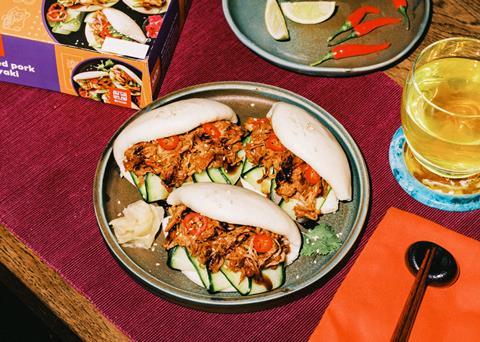
Another former challenger enters the top 100 with Yo at 93, improving on 128th place last year.
Health-oriented, on-trend launches and growing distribution have helped to generate a 27.5% value gain for Yo.
Undermining reformulation work
The suggested new model also threatens to render years of reformulation work redundant. Doritos and Belvita are among the brands that could be in the firing line, despite revamping their recipes to comply with the earlier HFSS rules.
The shift drew ire from the FDF when it was mooted in January. “Businesses made their investments based on a clear, government-defined standard – the NPM – and have made significant progress,” said Kate Halliwell, FDF chief scientific officer. “Making changes now undermines investment decisions that businesses thought they were making in the longer term.”
The only consolation is that consumer preferences don’t always follow government policy. “You can have products that consumers perceive as healthy but that fail the [HFSS] model. And vice versa,” points out Guy White, CEO of innovation consultancy Catalyx.
And in the eyes of the public, added benefits such as fibre, protein and gut health are holding increased sway. Quorn, for example, is fighting the UPF narrative by highlighting attributes such as fibre and protein content on pack, as well as removing artificial ingredients from its core frozen range.
“Brands that communicate clear, simple nutrition cues such as high in protein, a source of fibre, or low in saturated fat, often gain a competitive edge in crowded categories,” says Lucy Grogut, marketing director at Quorn Foods.
↓12 Richmond
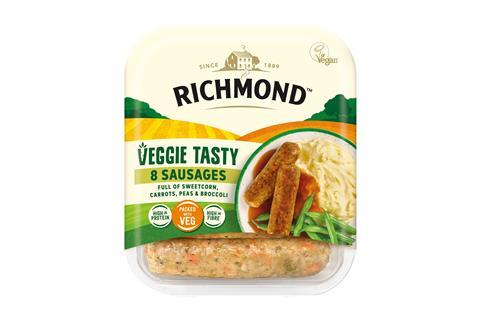
Richmond is down into 70th place, having ranked at 58 in 2025.
Pressure from cheaper own label alternatives has been key to Richmond’s poor performance. But the brand insists it’s still “loved by millions”.
That’s backed by Warburtons, which has launched products such as Fibre Fix loaf and rolls to tempt health-conscious shoppers. “Most people see ‘healthy’ in practical, positive terms. That means more of the good stuff – fibre, wholegrains, protein – in food that still tastes great and fits real lives,” says Colin Bebbington, Warburtons commercial director.
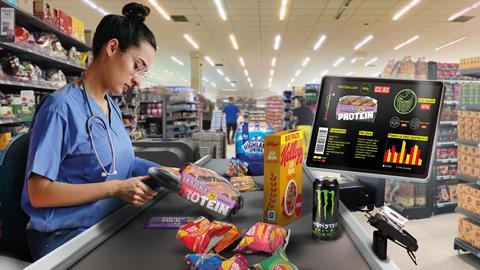
Brook is particularly excited by the second wave of the protein boom. It stands to be even more substantial than the first, he argues. This time around, though, the winners won’t necessarily be the same. “Expectations are evolving,” he says. “In cereal, ‘high protein’ is quickly becoming ‘high protein and low sugar’. In highly processed protein bars, consumers are shifting toward lifestyle protein with cleaner nutritionals, simpler ingredient decks and fewer formulations that read like a chemistry set.”
The potential was enough to catch the eye of Premier Foods, which snapped up breakfast brand Fuel10K in 2023. It has since expanded the range with the launch of Yogurt & Granola Pots last July, and ready-to-eat protein pots in September.
The momentum has also presented opportunities in the dairy sector, which is enjoying increased demand for options that are naturally high in protein, AHDB reports. Cottage cheese is a clear winner, having shot up 26.2% in value [NIQ 52 w/e 22 March 2025]. Meanwhile, dairy giants like Arla, Nestlé Lindahls and Danone are capitalising on the momentum with high-protein quark, yoghurt and cheese lines.
Brook similarly sees gut health – which is encouraging the consumption of probiotic and high-fibre lines – as a trend that’s here to stay. The flurry of consumer interest has sparked a raft of M&A. Most significantly, Müller acquired leading kefir specialist Biotiful in a £100m-plus deal last April. But there has also been activity in some less obvious corners of the market. Last year, PepsiCo swooped for US gut health soda brand Poppi, which made its UK debut this month.
↑18 Napolina
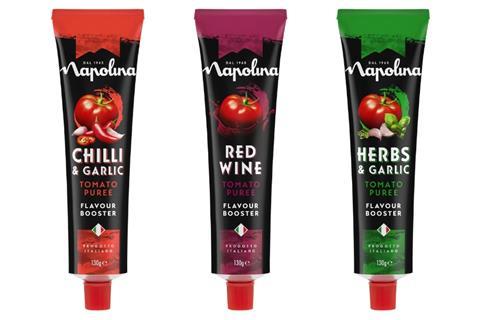
Napolina has barged back into the top 100 on a 15.3% value gain, ranking at 97 up from 115 last year. That was largely driven by the brand’s lengthy ‘Not So Humble’ campaign and a 6.7% fall in average price per pack.
Harnessing health expertise
M&A is an increasingly common way for large businesses to harness the health expertise of specialist challenger brands, says Brook. Essentially, it is often easier to buy ready-made expertise and a strong customer base than to start from scratch.
“We’re seeing a steady stream of health-led acquisitions, with larger players buying challenger brands that both strengthen their wellness credentials and unlock access to consumer groups their legacy portfolios struggle to reach,” he explains.
Those coveted wellness credentials can go well beyond human health. As Brook points out, the health of the planet is becoming an increasingly important driver of demand.
One brand that can testify to that mindset is Oatly, which makes a selling point of its sustainability and ongoing work to cut its climate footprint. “Consumers increasingly view health and wellness in a holistic way, one that includes nutrition but also environmental impact, ingredient transparency, and how a product fits within an overall balanced diet,” says Kate Overy, nutrition science & communications lead at Oatly. “They rarely assess healthiness in isolation or based on a single nutrient.”
That wider definition means health can even drive sales in categories like homecare. Eco-friendly cleaning brand Seep, which makes sponges, scourers and rubber gloves that are free from microplastics, has enjoyed a spate of new listings since founder Laura Harnett appeared on Dragons’ Den last year.
For her, the brand’s benefits to both the environment and human health have struck a chord. “Some people care about being eco-friendly but a lot don’t, so we’ve come full circle to talk about microplastics and how they affect human health,” says Harnett. Encouragingly, Seep is seeing no downturn amid the cost of living pressures, which could have pushed shoppers to the cheapest and lowest-quality options.
Quorn’s push to address the misconceptions of meat-free
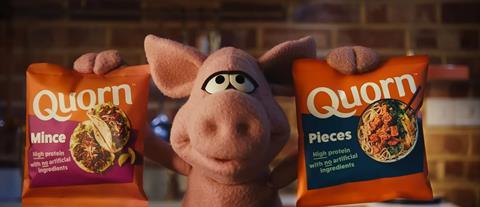
Health has clearly been front of mind for Quorn of late.
In August, it removed artificial ingredients from its two best-selling frozen items, Mince and Pieces, in a bid to address many shoppers’ belief that meat-free means ultra-processed. The category was rife with “polarising health claims and misconceptions”, said Lucy Grogut, head of brands at Quorn Foods UK, at the time.
The product revamp was communicated via ‘Nothing to Hide’, a multimillion-pound push starring puppet characters Perry Pig, Clarence Cow and Chickson Chicken.
More Quorn lines were given the same reformulation treatment later in the year.
Brook also believes in the enduring appeal of superior options with a higher price tag. “While headlines often claim that health shouldn’t come at a premium, the reality is that natural, minimally processed and functionally effective ingredients come at a cost,” he stresses.
“The real focus should therefore be on acceptable value for money, where price reflects ingredient quality and nutritional integrity.”
However, Brook believes cost pressures could shape future consumer habits. “Many consumers are now reassessing the sheer number of subscriptions, supplements and functional products they’ve accumulated for every individual health goal,” he points out.
For that reason, he foresees growing demand for products “that deliver against multiple need states”, such as all-in-one drinks and supplement brands AG1, Heights and Huel.
What’s more, these brands could appeal to consumers on weight loss injections. Due to their reduced calorie intake, shoppers on GLP-1 drugs such as Mounjaro and WeGovy can struggle to get the right levels of nutrition. It’s a relatively niche market for now: fewer than 3% of UK adults are taking the medication, found research published in BMC Medicine in January. But that’s all set to change. The UK GLP-1 market value is forecast to rocket from£820m in 2025 to £2.1bn by 2033, according to Grand View Horizon research.
That projected growth has inspired a raft of products specifically designed for GLP-1 users. At the start of the year, Morrisons, M&S, Co-op and Asda all launched nutrient-dense meals and snacks to cater to the trend. “That tells you retailers see this as structurally important, not a niche fad,” says White at Catalyx.
↓10 Princes
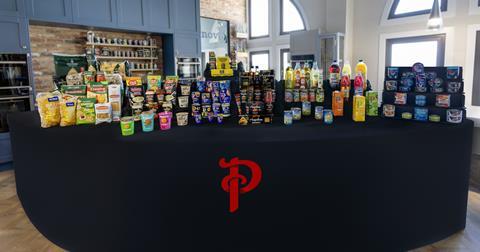
Princes is down 10 places from 85 to 95.
Princes’ fall is as much to do with other brands overtaking it than its own showing. The ambient player has shed less than 1.8% value. Not bad given the challenge from own label.
Brits still indulge
Still, that’s not to say the future is entirely health-driven. Cadbury remains safely at the helm of The Grocer’s Britain’s Biggest Brands, with sales of £2,546m. And while second-placed Coca-Cola has found success by offering calorie-free options, indulgence is the key for Cadbury, as attempts to bring out healthier lines – such as its Fruitier & Nuttier Trail Mix, which lasted just two years on shelves – have largely fallen flat.
That is not necessarily cause for concern. Brook believes treats will carry an enduring appeal, even as consumers become more health-conscious. “Not all shoppers want their favourites reformulated or ‘improved’, even as government intervention and regulation continue to evolve,” he stresses.
It’s a word of caution for any brand pursuing health at all costs, or scrambling to meet changing government requirements. Definitions of health will always vary. Different consumer groups will look for different messaging. And many health trends will come and go.
So keeping up with consumer behaviour may be important, but for businesses, the most important measure of health is arguably brand equity. Brands that know exactly what they stand for – and who they are targeting – stand to win now and in the future. And they can continue to generate healthy sales.
As Brook puts it: “There is a future for every brand that truly understands its consumer.”
Britain’s Biggest Brands 2026: how healthy are the UK’s biggest brands?
Brits are turning away from UPFs and HFSS goods. But with definitions blurred, and indulgence still desired, it’s a mixed picture for food and drink
 Currently
reading
Currently
reading
Britain’s Biggest Brands 2026: how healthy are the UK’s biggest brands?
- 2
- 3
- 4





No comments yet