






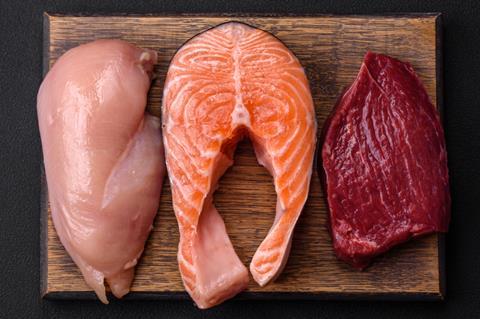
After a buoyant 2024, this year has brought a stark change in fortunes for the meat sector, with beef products particularly hard hit.
The key problem has been fewer available cattle – the result of a combination of factors, according to Nick Allen, CEO of the British Meat Processors Association (BMPA). Farmers are under financial pressure due to rising costs across the board, including fertiliser and National Insurance, while changes to environmental schemes are discouraging production, he says.
And amid this tightening supply, farmgate prices for cattle have remained high all year. At the time of writing, deadweight steers were 662.6p per kilo – a year-on-year increase of 24.4 % [AHDB 52 w/e 22 November 2025].
Those steep farmgate prices have led in turn to beef prices soaring in supermarket chillers. Beef’s value gain of 13.5% is due entirely to a 13.7% rise in average price per kilo. The meat’s volumes have fallen 0.2%.
Shoppers waiting for beef to get cheaper shouldn’t hold their breath, says Emma Wantling, retail & consumer insight manager at AHDB. “We’re not expecting it to come down any time soon, I’m afraid. It’s primarily because there are fewer cows in the system.”
Consumers are responding to costlier beef by “using various budget-saving tactics to purchase affordable beef options”, Wantling says, prompting an uptick in sales of frozen and economy-tier products. Of shoppers who have remained in standard tier, many have plumped for lower-quality meat, such as a higher-fat mince, or smaller packs.
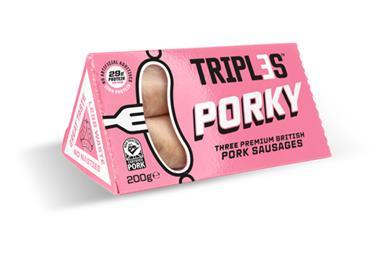
Other consumers are cutting out meat altogether or moving from beef to other animal proteins. Pork in particular has benefited from this shift in habits. It’s grown 2.4% in volumes – partly because it’s kept a tight lid on inflation, Wantling notes. Average price per kilo has risen a modest 1.1%, making it “a cost-effective, tasty alternative”.
Even some lamb products have been buoyed by price hikes in beef. Lamb burgers and steaks are attracting more shoppers as prices become comparable with beef. In the past, that “was a bit unheard of but is now the reality”, says Wantling.
These remain exceptions though. Across lamb as a whole, volumes are down 5.8% – because those who are “struggling with budgets are considering it less because it is so expensive”, says Wantling.
Higher prices are also weighing down sales of cheaper proteins – albeit to a lesser extent. Take chicken. It’s risen in price by 6.2% per average kilo, and volumes have dipped 0.3%.
But at £5.30 per average kilo, chicken is still significantly cheaper than beef (£10.58/kg) and lamb (£12.12/kg). And it remains the UK’s top protein of choice “due to its many cuts and adaptability”, notes Lisa Rees, NIQ team leader for retailer services.
That view is echoed by Jason Winstanley, Pilgrim’s Europe head of research & insights. Fresh chicken has benefited from “consumer trust in its versatility”, he says. Chicken sausages, for example, have registered 26.1% volume growth for similar reasons, he adds.
Winstanley also highlights a trend of premiumisation reshaping the market, as “consumers look to recreate restaurant-quality meals at home”.
Olly Kohn, co-founder of Jolly Hog, has spotted this too, identifying the “great and big change” of retailers “bringing out super-premium ranges” – including Tesco’s Finest Chef Collection launched in September and Sainsbury’s Occasions expansion in June, offering a premium butcher service.
Such innovation is important in encouraging consumers to trade up within affordable protein sectors, Kohn says.
This push toward premiumisation is further illustrated by sales of products adjacent to meat and poultry, Wantling at AHDB says, pointing to growing sales of posh marinades and sous vide cookers. “For everyday meals consumers are trying to find the most affordable, but for those treat meals, they are trying to find that luxury but at a reasonable cost.”
Allen at the BMPA predicts demand for premium options is here to stay and “that’s where to some extent it should go, really”.
He adds: “Meat is going to have to reposition itself. It is going to be a more expensive product and we are probably going to sell less of it, but if we can be at that value end of the market, then that’s not all bad news.”
So, the industry might still bring home the bacon – unlike the UK’s shoppers, who have put 5.1 million fewer kilos of bacon in their baskets. Value is down £42.3m due to the perception that it is a less healthy option, Rees says.
But Kohn is confident Jolly Hog, which produces a number of premium bacon products, is onto a winner by encouraging consumers to go for better-quality choices.
“There’s no way that people are not going to still want to have a treat and, when they do it, make it good,” he says.
Healthier fish
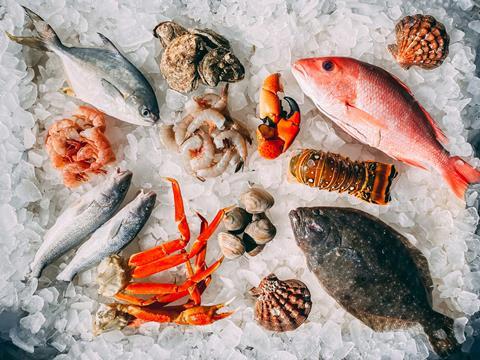
Sales of fresh fish, on the other hand, are looking healthy – and it’s health-conscious shoppers who have driven a 1.7% gain in volumes.
“It’s a lean source of protein and rich in omega-3, which supports brain function and mental wellbeing,” says Iain Lowrie, category insights director at Sofina Foods Europe.
However, sales still aren’t where they ought to be, believes Claire Sutton, marketing director at Birds Eye UK&I. Brits are still not eating enough fish, she says, and it’s up to the industry to address “the needs of this audience to make fish part of more mealtimes”.
One of the key demographics in which Birds Eye hopes to spark greater interest is younger consumers. Hence flavoured launches for Birds Eye Captain’s Discoveries and Young’s Taste of Asia ranges over the past 18 months.
Lowrie sees the sense of such NPD. “For many, their only interaction is through fish fingers, often at school. While fish fingers are a valuable entry point, the challenge is to expand their repertoire,” he says.
Expanding younger shoppers’ repertoire is something Bjørn-Erik Stabell, Norwegian Seafood Council’s UK director, believes is possible given they tend to be “more adventurous”, particularly out of home.
He sees significant opportunities in the likes of sushi and poke bowls to shift more seafood.
All which could tip the scales even further in fish’s favour.
Top Launch 2025
Guinness bacon and sausage | Finnebrogue
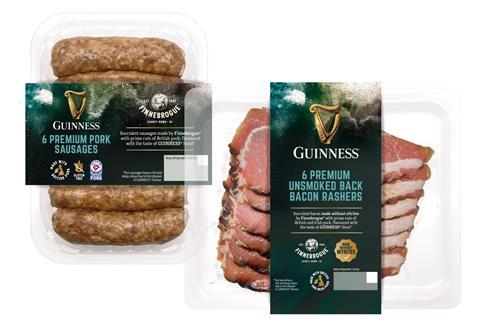
The Guinness boom is over, some have warned. Finnebrogue clearly disagrees. It expanded its partnership with the stout giant in September, launching Guinness Unsmoked Back Bacon (rsp: £2.75/200g) and Guinness Premium Pork Sausages (rsp: £3.75/400g). The gluten-free sausages are made with British and Irish pork and caramelised red onion. The bacon rashers are nitrite-free. They boast a deep colour from the stout and a sweetness from treacle. Perfect for a fry-up on the morning after.
How the psychology of price hikes has played out on shelves

The unwelcome return of inflation has prompted a wide range of tactics. How have shoppers responded and what should brands do next?
- 1
- 2
- 3
- 4
- 5
- 6
- 7
- 8
- 9
- 10
- 11
- 12
- 13
- 14
- 15
- 16
- 17
- 18
- 19
- 20
 Currently
reading
Currently
reading
Fresh - meat, fish & poultry 2025: Pricey beef losing out to cheap meat
- 22
- 23
- 24
- 25
- 26
- 27
- 28
- 29
- 30
- 31
- 32
- 33
- 34
- 35
- 36
- 37
- 38
- 39
- 40
- 41
- 42
- 43
- 44
- 45
- 46









No comments yet